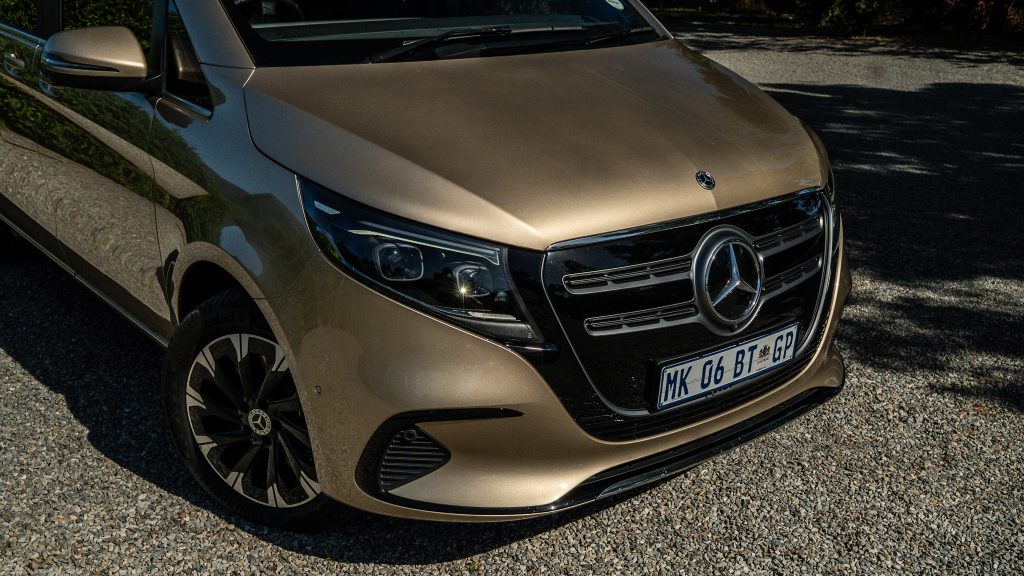
When Mercedes-Benz globally announced the launch of the EQV 300, their first all-electric luxury people mover a few years ago and there were no signs or mention of it making its way to South Africa, I wondered if we’d missed the moment.
Fast forward to the launch of the Vito earlier this year, Mercedes-Benz slightly hinted to plans of bringing more electrified van options into the country. And here we are. Electric vans have been promised for years, charging infrastructure remains patch at best and at R2.3 million, this electrified V-Class alternative costs serious money.
But rather than a gentle introduction around Johannesburg’s northern suburbs, we had something more ambitious in mind: a multi-day trek from Johannesburg to Cape Town, out to Knysna along the Garden Route, and back home via George and Graff-Reinet.
Years of seeing electric vehicles relegated to short urban commutes has perhaps conditions us to expect less. But this wasn’t going to be a gentle test around the block. This was the real South Africa, with all its infrastructure challenges, vast distances and the kind of proper road trip that would eithe vindicate or demolish the EQV’s credentials as a genuine long-distance luxury transport solution.
The Electric Monster
The Mercedes-Benz EQV 300 is, at its core, a V-Class that’s been thoroughly electrified. Where the diesel V300d relies on a 2.0 litre turbodiesel, the EQV employs a 150kW electric motor driving the front wheels, fed by a substantial 90kWh battery pack. Merceds claims a WLTP range of up to 363km, while our real life maximum came to 350km. Elsewhere there are outputs of 150kW and 365Nm. The 0-100km/h sprint takes 12.1 seconds, which sounds pedestrian on paper but feels far more sprightly in practice, thanks to that instant torque delivery that defines the electric vehicle experience.
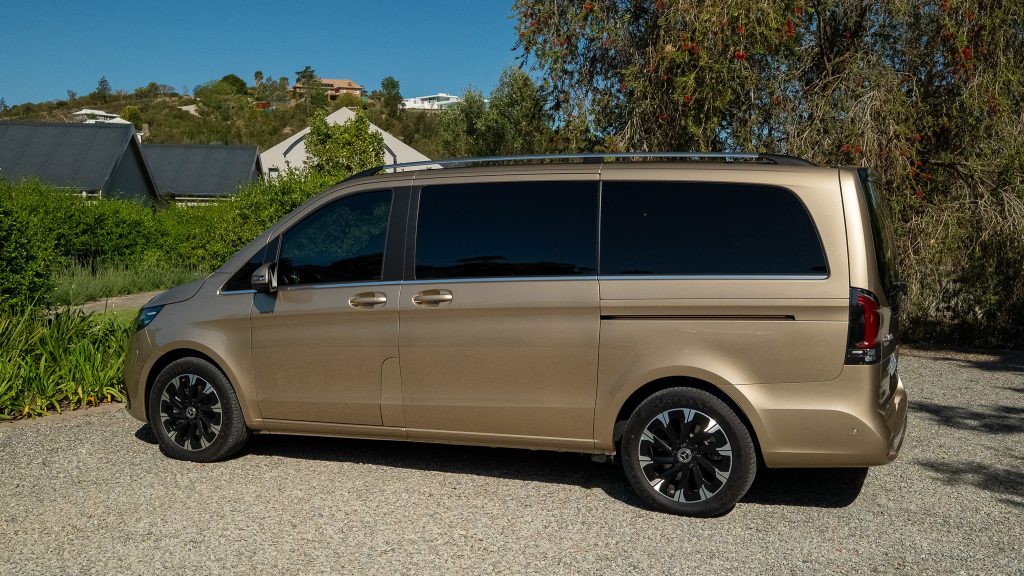
At 5 140mm long and tipping the scales at 2 748 km, this is no small machine. Yet Mecedes has managed to package the battery beneath the floor without sacrificing the V-Class’s renowned spaciousness. All seven seats remain intact, the boot floor sits at a convenient height, and headroom throughout the entire cabin is genuinely generous. It’s the sort of packaging efficiency that makes you wonder why more manufacturers haven’t pursued this route sooner.
Back to our road trip
The trip began at sunrise, with the EQV fully charged and the navigation plotting our route south along the N1. The first revelation came within minutes of leaving Johannesburg’s urban sprawl: where the diesel V-Class rumbles and grumbles, the EWV glides along with only wind noise and a subtle electric whir to indicate forward motion.
I quickly settled into the maximum regeneration mode, which allowed most urban and suburban driving to be accomplished with minimal brake pedal use. It’s not quite as aggressive as some EVs I’ve sampled, but it strikes a sensible balance between efficiency and passenger comfort. Truthfully, the last thing you want in a seven seater is abrupt deceleration that sends occupants lurching forward, right onto each other’s laps.
The charging infrastructure along the N1 has improved dramatically in recent years, though it remains far from perfect. GridCars and Rubicon have installed charging stations along the N1 between Gauteng and Cape Town, with 150kW DC fast charging capability at key locations. Our first stop came at Ventersburg, where the EQV’s 110kW DC charging capability meant we could add roughly 260km of range in about 40 minutes. Enough time for a proper breakfast and leg stretch. We repeated the same process in Bloemfontein at the Astron on the Hill and we later settled for an overnight stay in Colesburg to recharge our batteries (and the EQV) at a household three-pin plug.
Our journey continued first thing in the morning with a quick charge at the Astron Colesburg station, followed by Richmond, Beaufort West, Laignsburg then Worcester.
Here’s where the EQV 300’s position becomes clear; this isn’t a vehicle for those in a hurry. If you’re transporting VIP clients, executives or family on a leisurely road rtip, the enforced charging stops become opportunities for breaks, meals and experiencing the journey rather than simply enduring it. For high-mileage shuttle services or tight airport runs, the diesel V-Class remains the more practical choice.
The Garden Route
After a few days in Cape Town, we headed east along the N1 toward Knysna, and this is where the EQV truly revealed its character. The Garden Route’s sweeping coastal roads, with their moderate pace and scenery, suit the electric van perfecetly. Range anxiety evaporated as we reached our first charging station in Swellendam, followed by Riversdale then Hartenbos.
On the highway, cruising at 120km/h, we acheived roughly between 2.4 and 2.6 kWh, translating to a realistic rnage of about 250 -280km between charges. The onboard range estimator provided refreshingly accuarate, never lulling us into fasle security or causing panic.
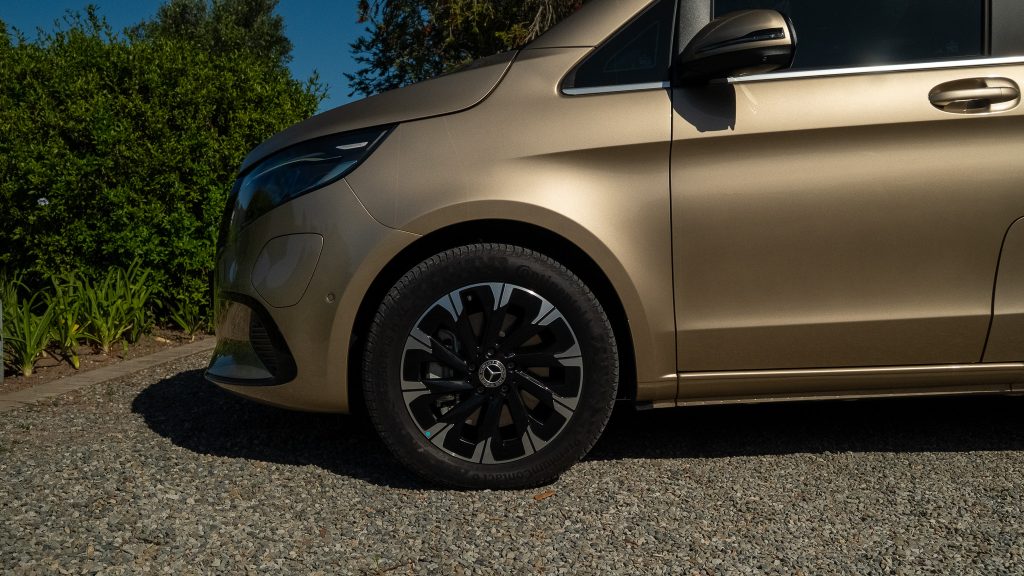
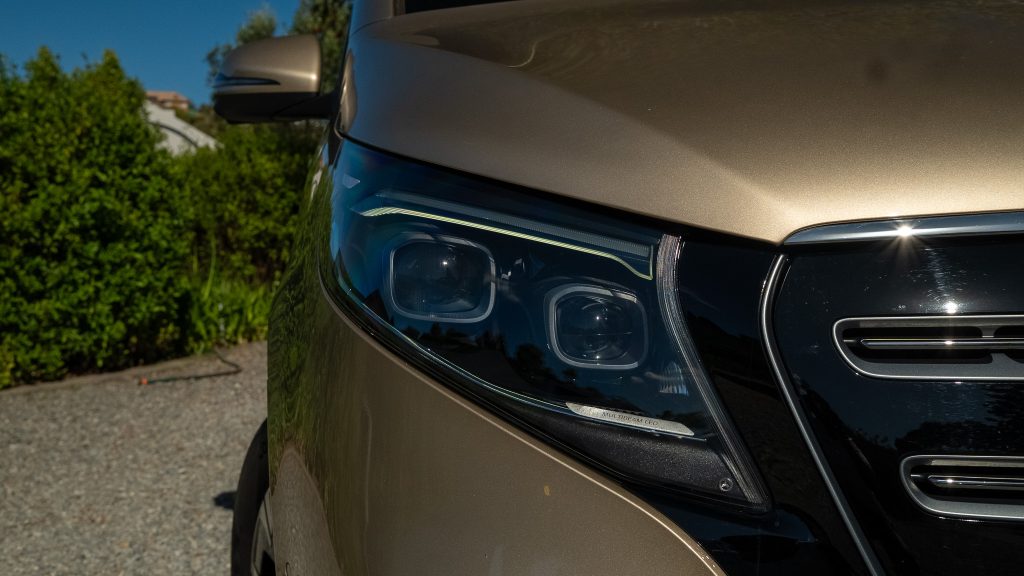
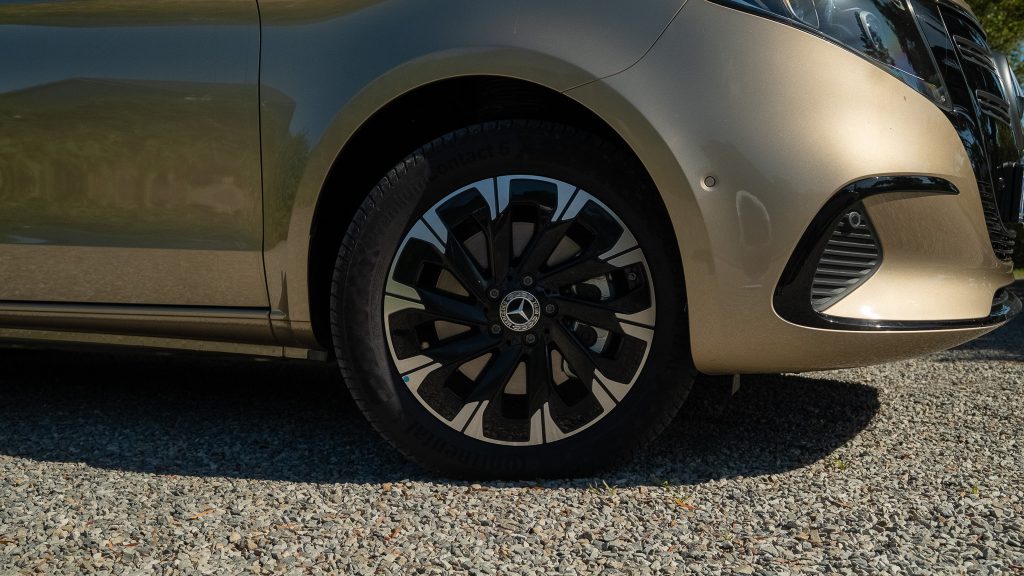
The ride quality also impressed. Our unit is kitted out with the AIRMATIC air suspension which smoothed out the uneven surfaces and made driving on rediential routes with humps and pot holes a breeze. It rides on 18-inch wheels that add to the entire expiernce, with a lovely rim design to match.
Mercedes-Benz EQV 300 Technology
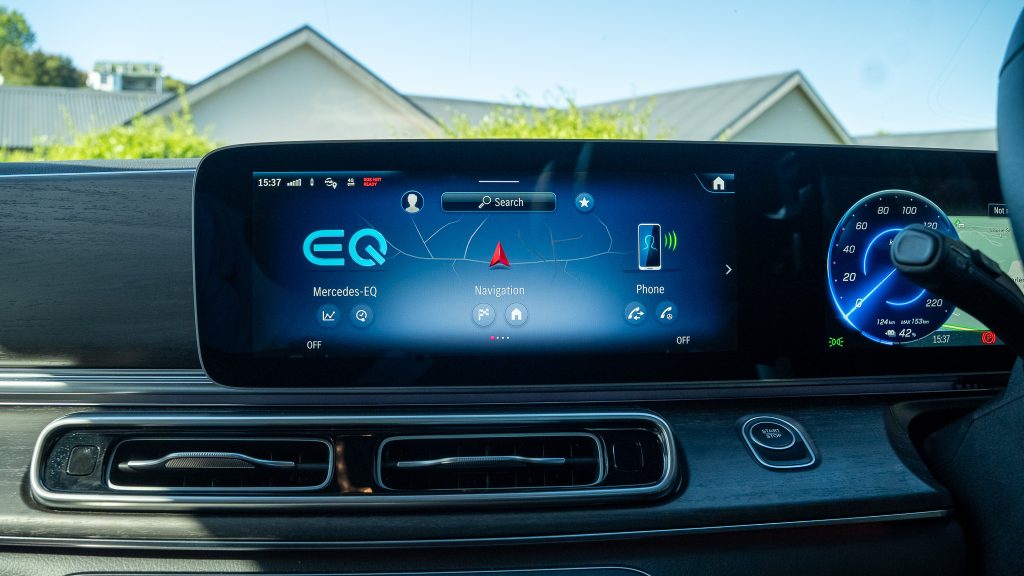
The 2025 Mercedes-Benz EQV 300 brings significant interior updates that elevate the EQV beyond its van origins. The 12.3-inch touchsreen display runs Mercedes’ MBUX multimedia system, complete with augmeneted reality navigation that overlays directional arrows onto the live camera feed. On unfamiliar roads through small Gargen Route towns, this proved genuinely useful rather than mere gimmickry.
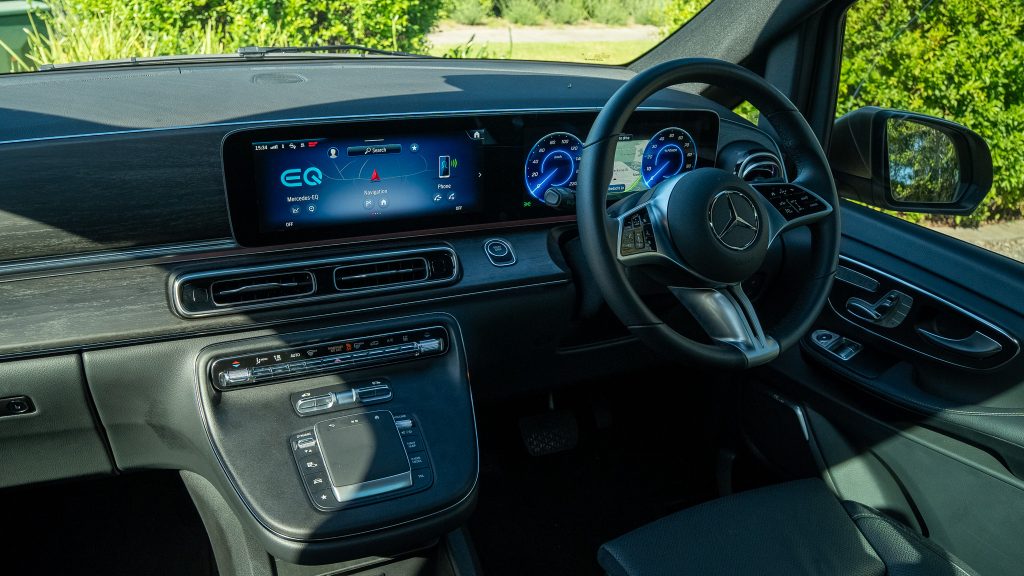
The three zone climate control kept all occupants comfortable across varying temperates, and the pre-entry climate control meant we could cool the cabin while plugged in, preserving battery range for driving.
Material quality throughout feels appropiate for the price point, with Lugano leather uplostery in black as standard, wooden trim, 64-colour ambient lighting creating an atmosphere that’s distinctly Mercedes. The captain’s chairs in our vehicle offered heating and ventilation although you can spec it out further with massage functions.
The Reality of Long-Distrance EV Travel
The return lef from Knysna to Johannesburg via George and Graaff-Reinet proved the most challenging. While coastal routes benefit from relatively dense charging infrastructure, inland sections remain underserved. The stretch through the Karoo required careful planning, with charging stops at Willowmore and Graaff-Reinet breaking the journey into manageable segments.
The total trip covered approximately 2 800km over five days. Total charging time – including meals, overnight stops, and one extended break in Cape Town and Knysna amounted to roughly 10 hours.
In the end
The Mercedes-Benz EQV 300 isn’t perfect, but it represents a genuine step forward for electric mobility in South Africa. Our epic road trip proved that long-distance EV travel is not possible but can be genuinely e njoyable, provided you’re willing to adjust expectations and embrace a different pace.
The charging stops become oportunities rather than obstcles. We explored towns we’d typically bypass, discovered excellent restaurants at unexpected locations and arrived at each destination feeling more refreshed than trade-off justifies the EQV’s limitations and premium pricing depends entirely on your priorities and usage patterns.
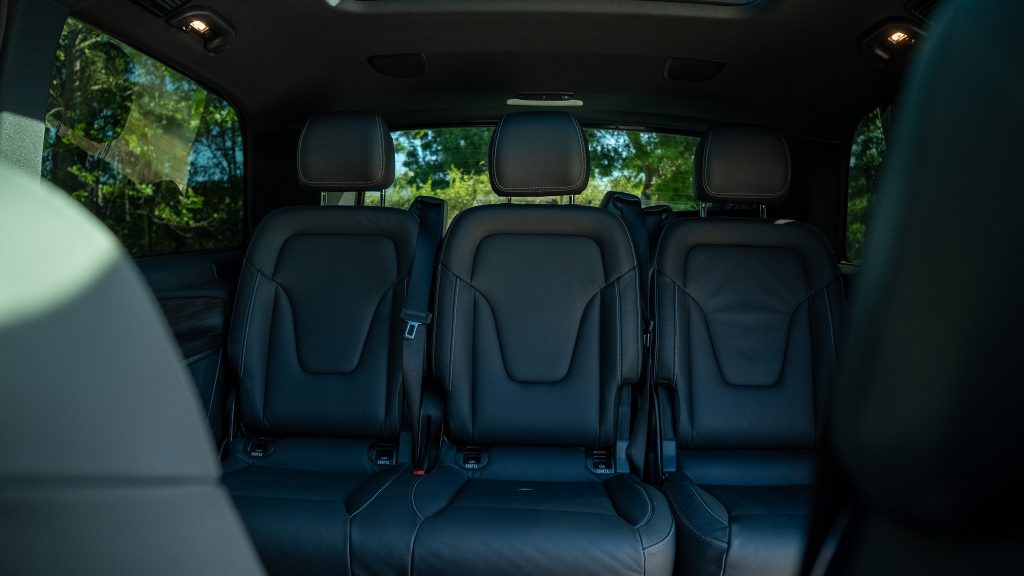
For families seeking distincitve, environmentally conscious way to travel South Africa’s incredible landscapes, the EQV delivers. For executives transport services operating predictable routes with reliable charging access, it makes compelling business sense. For eveyone else, the diesel V-Class remains the more practical, if less interesting, chhoice.
As I returned the EQV after our eleven-day trek, having covered nearly 3000km, with no infrastructure hiccup, I found myself surprisingly reluctanct to hand back the keys. “I really want to drive this electric van some more” is not a phrase I expected to utter. Yet the EQV’s combination of luxury, practicality, and that addictive instant torque delivery makes a complelling argument for electric motoring’s future. Even in a country where the future remains very much a work in progress.


You might also like

More from Cars
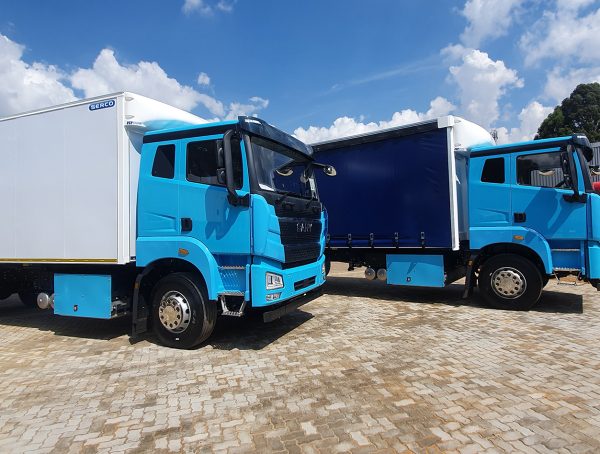
Serco and SANY Trucks Partner to Deliver Next-Electried Commercial Vehicles
Serco has successfully designed and manufactured rigid truck bodies for SANY Trucks' local electric vehicle range. The project, completed at …
2026 Volvo ES90 Ultra Review: A Masterclass
There is a specific kind of composure that usually only exists in a high-end spa, like the Saxon, or an …
Your Car Belongs in Your Garage, Not on an Auction Floor

Repossession is a nightmare nobody wants to face, and believe it or not, your bank agrees. If you’re feeling the …