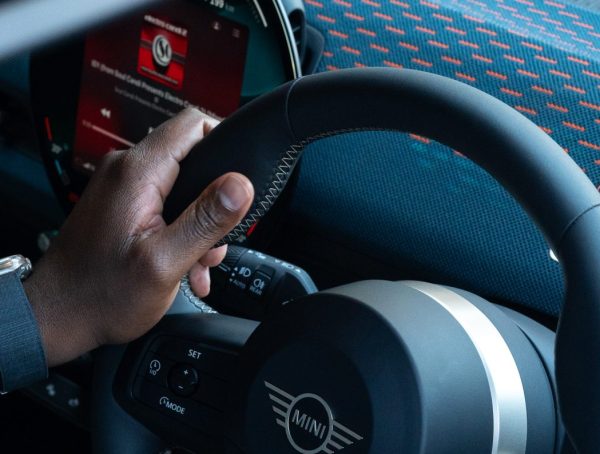
Four months into our long-term test with the MINI Aceman S, we’ve moved past the honeymoon phase and settled into the reality of daily life with this electric crossover. Some features we expected to love have proven less impressive than anticipated, whilst others—things we barely noticed initially—have become genuine favourites.
Here are five aspects of the Aceman that have won us over completely, from the obvious strengths to some surprising discoveries that only reveal themselves after proper time together.
1. The Style and Design: Ageing Gracefully
Why it matters: In the fast-moving EV world, many electric cars look dated within months of launch. The Aceman doesn’t.
When we first took delivery of our Melting Silver III Aceman S back in May, we appreciated the design but wondered if its bold, angular look might feel gimmicky after a few months. We’re pleased to report that the opposite has proven true, the Aceman’s design is ageing remarkably well.
The exterior still turns heads. People still stop to ask what it is. And crucially, we still enjoy looking at it in the driveway, which is rarer than you might think after months with any car. The Melting Silver III paint continues to catch the light beautifully, the proportions still look right from every angle, and the overall design feels contemporary without trying too hard to be futuristic.

What we particularly appreciate is how the design translates the classic MINI formula into crossover form without losing the brand’s character. It’s recognisably MINI—the octagonal grille, the floating roof, the chunky proportions—but it doesn’t look like a Cooper that’s been inflated or a Countryman that’s been shrunk. It occupies its own space, both visually and conceptually.
The interior design has similarly grown on us. That circular OLED screen initially seemed like it might be a gimmick, but it’s become one of our favourite aspects of the cabin. It’s distinctive, it works brilliantly, and it gives the interior character that generic rectangular screens can’t match. The knitted dashboard material, the ambient lighting, and the overall minimalist approach create an environment that feels special without being pretentious.
After months of living with the Aceman, we can confidently say the design is one of its strongest assets. It’s not trying to be edgy or revolutionary—it’s just well-executed, distinctive, and aging better than many of its electric competitors. In five years, we suspect the Aceman will still look contemporary, which is rare praise for any EV.

2. The Technology: Smartphone Simplicity
Why it matters: Complex tech that doesn’t work properly is worse than no tech at all. The Aceman’s tech just works.
We’ll be honest, we were sceptical about MINI Operating System 9 and that circular screen. It looked like style over substance, a gimmick that would frustrate daily. We were wrong.
The technology in the Aceman is genuinely excellent, and it’s excellent for the right reasons: it’s intuitive, responsive, and it actually enhances the driving experience rather than complicating it. The 9.4-inch OLED screen responds like a smartphone – zero lag, instant touch feedback, smooth animations. In a world where many automotive touchscreens feel like they’re running on 2010 hardware, this is refreshing.
The layout makes sense. Commonly used features sit along the bottom of the screen in a dock, just like your phone. Speed and battery level are always visible at the top. Widgets on the sides let you quickly access different functions. It’s not revolutionary—it’s just good interface design applied to a car, which is rarer than it should be.
Phone connectivity is flawless. Wireless Apple CarPlay and Android Auto connect instantly when you start the car. They work reliably, they don’t drop connection, and they integrate smoothly with the car’s systems. Charging phones wirelessly actually works—they don’t overheat, they don’t stop charging mysteriously, and they’re conveniently positioned. These sound like low bars, but you’d be surprised how many cars fail to clear them.
The customisation options have proven more valuable than expected. Being able to arrange your favourite features in a “toolbelt,” choose your wallpaper, and adjust the experience modes means the interface feels personal rather than generic. We’ve settled into Personal mode with a custom wallpaper and ambient lighting setup that makes the car feel distinctly ours.
Spike, the AI assistant that takes the form of a jumping dog, initially seemed silly. It still is silly, to be honest, but it’s functional silly. Voice commands work reliably; “Hey MINI, navigate to Parys” or “Hey MINI, set temperature to 22 degrees” work without frustration or misunderstanding. It’s not groundbreaking AI, but it’s competent voice control with MINI character, which is better than competent voice control without character.
The over-the-air updates mean the car keeps improving. We’ve received two updates since taking delivery, each bringing small improvements and refinements. It’s the kind of future-proofing that wasn’t possible with older cars, and it adds confidence that the Aceman won’t feel dated as quickly as traditional vehicles might.
Technology for technology’s sake is worthless. Technology that makes daily life easier, more enjoyable, and less frustrating is valuable. The Aceman delivers the latter, which is why it’s made our list.

3. The Safety Features: Quiet Confidence
Why it matters: Safety systems only matter if they actually help rather than hinder. The Aceman’s do.
We dedicated an entire article to the Aceman’s safety features, but they deserve mention here too because they’ve genuinely earned our appreciation. These aren’t systems we tolerate—they’re systems we actively value.
The comprehensive sensor array – twelve ultrasonic sensors and four cameras—provides genuine 360-degree awareness. Blind spot monitoring has saved us from dodgy lane changes multiple times in Johannesburg traffic. The forward collision warning, once we adjusted its sensitivity, has alerted us to hazards we might have reacted to a fraction of a second later. The exit warning has prevented potential door-strike incidents with approaching motorcycles.
What makes these systems work is their calibration. They’re not so aggressive that you’re constantly fighting false alarms, nor are they so timid that you wonder if they’re functioning. They provide information and gentle interventions, leaving you firmly in control whilst adding a safety net for those moments when attention lapses or conditions exceed your reaction time.
On South African roads specifically—where taxis make unpredictable moves, pedestrians cross highways, and road conditions vary wildly—these systems add genuine value. They help compensate for the chaos, providing warnings about hazards you might not immediately spot in busy, unpredictable traffic.
The beauty of good safety technology is that it works quietly in the background. You don’t constantly think about it, but you feel more confident knowing it’s there. After months with the Aceman, we trust these systems, which is the highest compliment we can give.

4. The Charging Speed: Minimal Waiting
Why it matters: DC fast charging turns range anxiety into range confidence.
One area where the Aceman genuinely impresses is charging speed. The Aceman S can charge at up to 95 kW on DC fast chargers, which means a 10-80% charge takes roughly 30 minutes under ideal conditions. This isn’t the fastest charging in the EV world—some competitors hit 150 kW or more—but it’s fast enough to make longer trips viable without excessive waiting.
We’ve tested this on our Parys road trip and various other journeys around Johannesburg. We know finding a working, available fast charger in South Africa can be hit-or-miss, but when we do find one, the Aceman charges quickly enough that a coffee break or quick lunch is all the time you need to add substantial range.
What’s perhaps more impressive is the 11 kW AC charging capability, which is standard. This means overnight charging at home or at a workplace charger replenishes the battery fully, making DC fast charging something you only need for longer trips rather than regular daily use. For urban dwellers with reliable home charging, this makes the Aceman genuinely practical as a daily driver.
The charging port is located on the driver’s side rear, which initially seemed odd but has proven convenient for most charging station layouts we’ve encountered. The flap opens easily, the port is well-lit at night, and there’s a helpful indicator light showing charging status without needing to check the screen.
Charging infrastructure in South Africa isn’t perfect—we’ve encountered broken chargers, occupied spots, and locations where the advertised charger doesn’t exist—but when the stars align and you find a working fast charger, the Aceman’s charging speed means you’re not stuck waiting for ages. For an EV competing in this segment, that’s crucial.

5. The Compact Size: Urban Manoeuvrability
Why it matters: In congested Johannesburg, size is an advantage, not a compromise.
When we collected the Aceman, its compact footprint seemed like it might be a limitation—less space, smaller boot, tighter rear seats. After months of daily driving in Johannesburg, we’ve realised it’s actually one of the car’s greatest strengths.
At 4.07 metres long, the Aceman fits everywhere. Tight parking spots in Sandton that would challenge larger SUVs? No problem. Navigating Melville’s narrow streets lined with parked cars? Easy. Squeezing into the last available spot at Rosebank Mall? Done. The compact dimensions make urban life genuinely less stressful.
The turning circle of 11.1 metres is impressively tight for a crossover, making U-turns and parking manoeuvres easier than they have any right to be. Combined with excellent visibility, light steering at low speeds, and those comprehensive parking sensors, the Aceman feels nimble and manageable in situations where larger SUVs would require multiple attempts and frayed nerves.
What’s clever is that MINI hasn’t sacrificed the elevated driving position that makes crossovers popular. You sit higher than in a Cooper hatchback, with better visibility and a sense of security in traffic, but you’re not piloting a massive SUV that requires planning every parking attempt. It’s the best of both worlds—SUV-like stance and visibility, hatchback-like manoeuvrability.
On longer trips like our Parys run, the compact size doesn’t feel limiting. The cabin is comfortable for two adults, the boot handles weekend luggage without issue, and the car feels stable and confident at highway speeds. It’s only when you try to carry four or five people with luggage that the compact dimensions become a genuine limitation—but for couples, small families, or urban professionals, it’s the right size for modern life.
In a market obsessed with bigger, larger, more spacious, the Aceman’s compact dimensions feel refreshingly sensible. It’s as big as it needs to be, and not an inch more. In Johannesburg’s congested streets and limited parking, that’s a genuine advantage.
What We’re Loving:
- Style and design that’s ageing gracefully
- Technology that’s intuitive and responsive
- Safety features that provide quiet confidence
- Charging speed that minimises waiting
- Compact size perfect for urban life


You might also like


More from Cars

Geely’s Riddara Electric Bakkie Priced for South Africa
Geely Auto South Africa has officially introduced Riddara, Geely Auto Group’s new-energy bakkie brand, to the South African market. The RD6 …

More Dealerships On The Cards For Volvo Cars South Africa
At an exclusive Volvo Cars Track Experience held at the internationally accredited multi-disciplinary Gerotek Testing Facilities located west of Pretoria …
Things Took a Left Turn When I Joined Jetour At Its KZN Festival
That headline might be a little dramatic because things took a left turn for the better when Jetour invited me …